

WASTE
In medieval towns, it was common to accumulate waste from craft production and households not only in courtyard areas, but also in the streets and other public spaces. Animals (particularly pigs) were a major source of pollution. In medieval Ostrava, waste was dealt with in several ways. People threw faeces into cesspits or ditches outside their houses, they transported waste to locations outside the town, they dumped it in moats or rivers, or the waste simply remained on the ground – as demonstrated by the waste layers found below the surfaces of streets or squares (such as the nearby Muzejní Street).
DISEASES
Diseases are an integral part of life. In the past, poor hygiene was a major contributor to poor health. For example, wells became contaminated by faecal matter seeping into them from cesspits, leading to the spread of gastrointestinal diseases. Archeologists have analyzed material from the former cesspits at the Lauby site and found evidence of parasite infestations (such as eggs laid by the pinworm Oxyuris). Medicinal plants were used to treat diarrhoea or respiratory diseases, or to cause patients to “sweat out” an illness. Distilling techniques could also have been used to produce medicines; the finds from the Lauby site included a fragment of distilling equipment.
CESSPITS
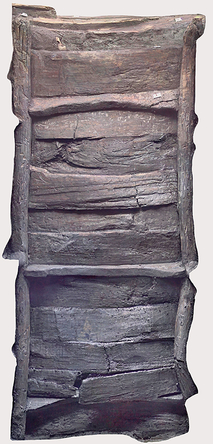
In the central part of two parcels (houses nos. 54 and 55), archeologists found five right-angled structures, four of which had evidently been dug down to a depth of more than two metres. All these structures had carefully constructed walls (reinforced and consolidated with timber) and were used as cesspits to deposit faecal waste. It has been calculated that a family of five will take approximately seven years to completely fill a 1 m3 cesspit. This means that one of the Lauby cesspits with a depth of 2 metres could have remained in use for 15 to 20 years.
Akce: Otevřít verzi pro tisk